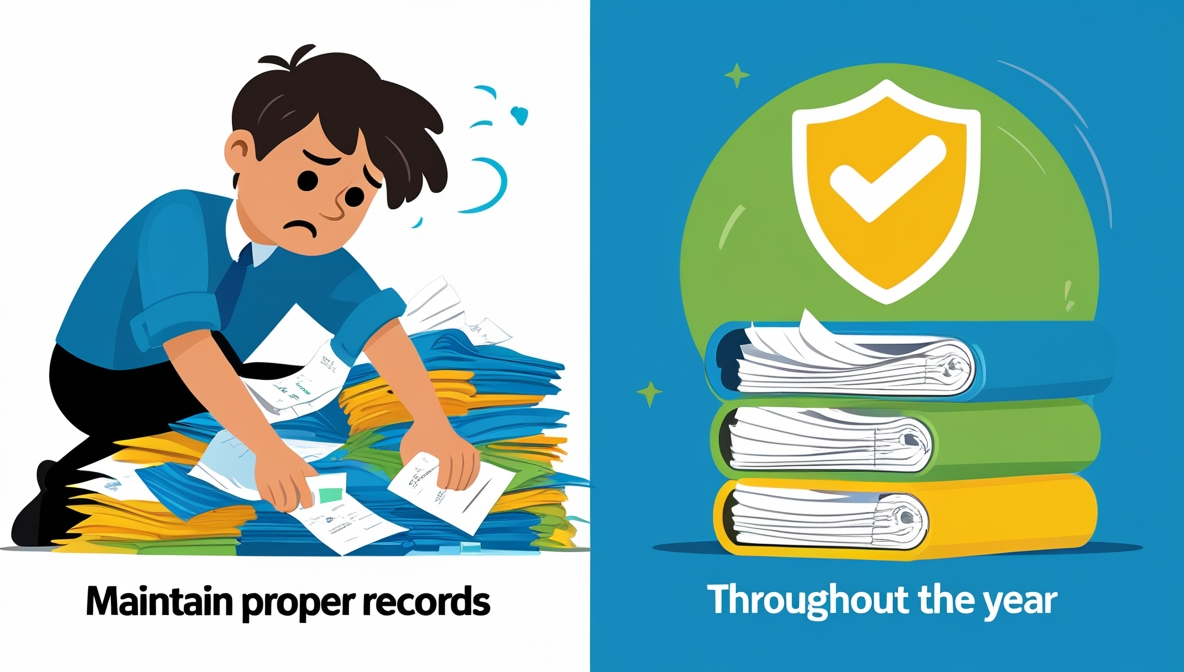
It is so much simpler to do your taxes if you have your records organized throughout the year. A few individuals procrastinate until the last moment, and then they cannot find what they are looking for. They rummage through drawers, boxes, or even old emails. That is frustrating. It can also lead to errors. Being organized is similar to a clean desk—you can locate what you need when you need it.
Why Records Are Necessary
The IRS would prefer to have proof if it ends up auditing your tax return. Proof can be a letter, a bank statement, or a receipt. If you cannot produce it, you may lose a deduction or even be penalized. Prepared records also save time. You do not have to guess or estimate. You know what you gave, what you spent, and what you earned.
What to Keep
* Income Forms: W-2s, 1099s, and anything that shows money earned.
* Receipts: Work expenses, doctor expenses, or donation expenses.
* Bank and Credit Card Statements: They validate your income and expenses.
* Large Purchases: Home repairs, cars, or school tuition can be costly for taxation.
* IRS Letters or State Tax Office: Always obtain them.
Easy Tricks to Stay Organized
You do not need high-tech equipment. A box or folder will suffice. Some people use a binder with tabs. Others store receipts by scanning them into a program. Experiment and find the method that works most easily for you. The goal is to make a habit of doing it regularly, not only at tax time.
* Put documents in the same spot each time.
* Classify and mark folders: income, expenses, medical, and donations with labels.
* Create electronic copies on a cloud or on your computer.
A Real-Life Example
Let us say you made a charity-clothing donation in March, paid tuition in July, and bought tools to work with in November. If you throw those receipts anywhere, you won’t be able to lay your hands on them in April. Put them into a file when you receive them. You will be prepared when tax time arrives.
How Long Should You Keep Records?
Most tax experts recommend holding on to records for a minimum of three years. The IRS can audit your return that far back. Some documents, such as records on the purchase of your home, need to be held longer.
Final Thought
Not keeping records year-round makes taxes harder, riskier, and more expensive. The habit of saving papers now saves stress later. Keeping records is simple. Not keeping them brings problems.
At AutomaticTaxReturns.com, we share lessons that help taxpayers avoid mistakes and being audited. Staying organized is one of the easiest ways to protect your money and your peace of mind.
See below what to expect at an audit.
About the Author