Taxes Throughout Time
When most think of taxes, they see forms, deadlines, and the nervous shuffling of papers during tax season. But behind the modern-day Internal Revenue Service is a fascinating and complex history that shaped how America funds itself and steadies its economy. The old IRS tax law did not come about overnight. It was born out of wars, loans, and the constant need to fund a growing nation.
Taxes have been in existence since the earliest times, yet America’s began with revolution and necessity. To understand how the IRS came into existence, we must travel back to the mid-1800s when the government experienced one of its worst economic downturns.
War, Debt, and the First Tax Law
It began during the Civil War. The Union needed money desperately in 1861 to pay for its soldiers and keep the military operations going. President Abraham Lincoln signed the first federal income tax as part of the Revenue Act of 1861. It was the first time that Americans were required to contribute some of their earnings to the federal government.
This initial income tax was modest—three percent on salaries above $800 a year—but it was revolutionary. It represented a new kind of relationship between citizens and the state. For the first time, the state was reaching directly into individuals’ wallets to finance national needs.
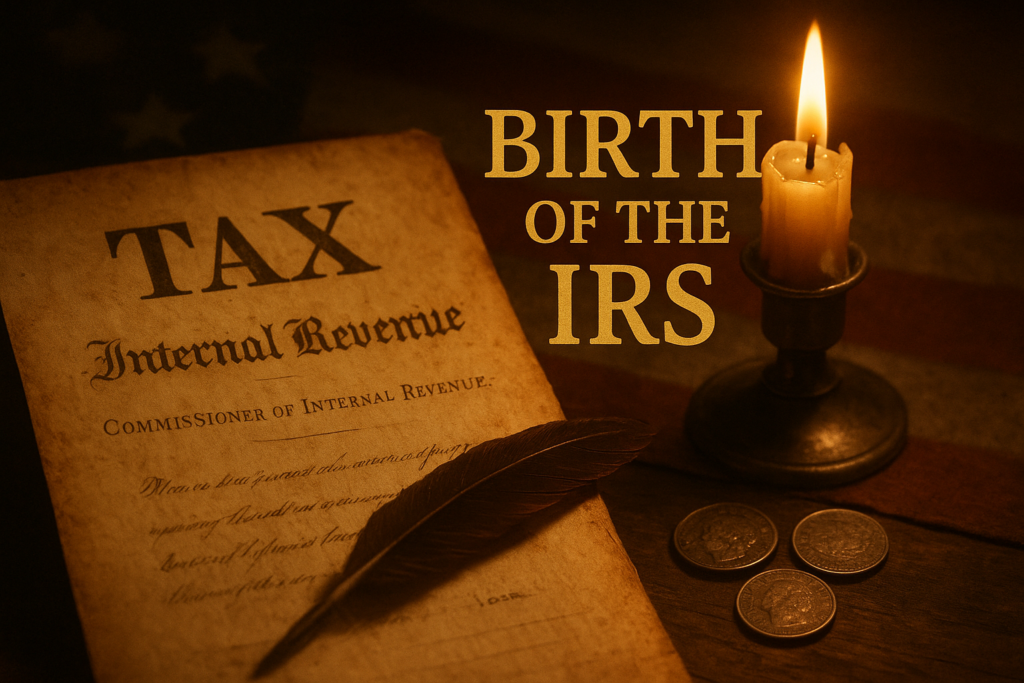
In 1862, the government made the system formal by establishing the Office of the Commissioner of Internal Revenue, which would eventually grow into the modern-day IRS. This was an office that was responsible for collecting the taxes, making investigations for fraud cases, and enforcing compliance with federal law.
The Birth of the Internal Revenue System
The Internal Revenue Act of 1862 became the basis of taxation in the United States. Excise taxes, income taxes, and even stamp duties on everyday items such as newspapers, alcohol, and tobacco were instituted by it. Government collectors were hired to collect taxes, as well as tax districts throughout the nation. This is the beginning of the subsequent American Internal Revenue Service.
The IRS was born into crisis and turmoil, but it gradually became a stronghold of American finance. Its task was simple yet monumental—raise money in haste to keep the nation alive. And it succeeded. The income tax generated millions of dollars and kept the Union army provisioned in the Civil War.
Once the war was over, the majority of citizens hoped to see an end to the income tax. And so it did for a while. The government repealed the tax in 1872, believing that tariffs and excise taxes would be enough to keep the country running. But this wasn’t the last seen of it.
The Tax Returns—And So Did the Controversy
By the 1890s, economic inequality and industrial growth pushed Congress to reconsider federal income. Legislators attempted to reinstate the income tax in 1894 by legislation. The Supreme Court immediately struck it down, however, as unconstitutional in Pollock v. Farmers’ Loan & Trust Co. The holding was that an income direct tax was unconstitutional since it was not apportioned among states by population.
The action angered working-class citizens and reformers. The rich and corporations were perceived to be evading their just share of taxes. The cry for fairness and accountability grew louder until the Sixteenth Amendment changed everything.
The Sixteenth Amendment and the Modern IRS
The Sixteenth Amendment was ratified in 1913, and this legally provided Congress with official power to tax incomes without apportionment among states. This was actually the true origin of the modern-day IRS system. It gave the federal government a stable fiscal power and allowed it to fund national programs, wars, infrastructure, and social welfare systems.
The initial modern tax return, Form 1040, was introduced that year. People paid very little in taxes at first, but by and by, all that changed when the country went to war and again encountered economic strife. World War I and subsequently the Great Depression caused the IRS to become even larger, creating more sophisticated and widespread machinery.
From Paper to Power
By the mid-20th century, the IRS was not only a collector but also an institution. With the advent of technology and automation, collections of taxes became quicker and more accurate. But with every power came criticism. Americans felt over-regulated by complicated laws and feared errors could prompt audits or fines.
Despite its infamous reputation, the IRS remains an integral part of how this nation operates. All roads, schools, and public services are funded by money that traces its roots back to the original 1800s tax codes. The system continues to evolve based on politics, economics, and public opinion.
Final Reflection: Lessons from the Past
The record of the old IRS tax law reminds us those taxes as unpopular as they are part and parcel of American history. They are a reflection of our struggles and successes. All the legislation, amendments, and overhauls were a result of necessity as much as to pay for wars, build roads, and send aid to its people in times of adversity.
When you pay taxes today, you are a part of a system that began over 160 years ago. It is convoluted, perhaps, but it is proof of a country that continually reinvents itself to survive and thrive.
About the Author